
Industrial Reactors and Exothermic Reactions: Engineering Out the Risk
Key Takeaways
- In chemical processing, industrial reactors routinely perform exothermic reactions where heat is generated all on its own.
- When created heat exceeds the reactor’s ability to dissipate that heat, many reaction hazards can quickly develop, ranging from equipment damage to catastrophic failure.
- Effectively protecting against exothermic reaction hazards takes a multi-pronged engineering approach that spans equipment design, process controls, safety systems and formal risk management.
Chemical processing reactors are exposed to all types of forces and energies – some mild, some intense. Even in normal operation, every reaction carries the risk of slipping out of control and turning into a very real hazard. Thermal runaway is one of the most dangerous of these hazards, which can only be mitigated through diligent process engineering, sophisticated equipment design and experienced system operation.
Here are a few definitions to start our discussion:
- Industrial process reaction: In the context of chemical process manufacturing, a reaction is a controlled chemical transformation used to convert raw materials into a desired product.
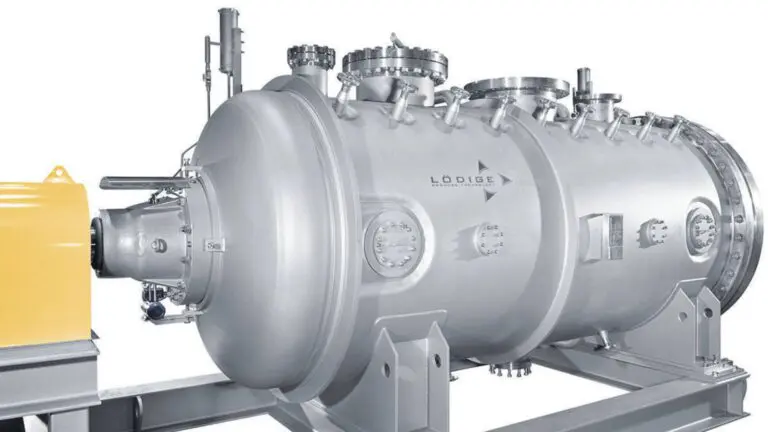
- Industrial reactors: Equipment designed to safely contain and facilitate chemical reactions as part of a wider manufacturing process.
- Exothermic reaction: A chemical reaction that releases energy in the form of heat, in excess of external energy added to the reaction. In other words, exothermic reactions “create” their own heat.
- Thermal runaway: A condition where heat generated by the reaction exceeds the reactor system’s ability to sufficiently remove that heat, causing a perpetually rising heat hazard.
- Chemical reaction hazards: Dangerous conditions created by uncontrolled reactions (like thermal runaway) that may result in overpressure, fires, explosions, toxic releases, equipment damage or environmental impacts.
Exothermic reactions are not inherently dangerous. The danger arises when heat generation exceeds the reactor’s ability to safely remove that heat, leading to unsafe conditions. For this reason, process personnel must understand both the hazards associated with thermal runaway and the engineering methods used to mitigate them.
Specific Risk Factors of Exothermic Chemical Reactions
To better understand the specific risk factors that come along with exothermic chemical reactions, here are a handful of examples:
- Thermal runaway: Starting with the primary issue from our above definitions, thermal runaway is heat generation that exceeds heat removal capacity, causing rapidly accelerating temperatures and reaction rates.
- Inadequate heat removal capacity: Cooling systems that cannot remove reaction heat quickly enough will reach saturation, often leading to their own high-load shutdowns.
- Temperature hot spots: Localized overheating creates uneven reaction rates and product decomposition, along with increasing risks of equipment damage and over-compensating process controls.
- Pressure buildup: Exothermic reactions often generate vapors, gases and boiling conditions as well as increase product volumes via thermal expansion, all of which increase internal pressure within a reactor.
- Instrumentation and control failures: Elevated temperatures present especially concerning risks to instrumentation, skewing calibration and exceeding sensing ranges that can completely “blind” a control system.
- Issues of scale: Exothermic reactions can also present exponential heat loads as process volumes increase in scale, presenting unexpected issues that are orders of magnitude more hazardous than at testing volumes.
Engineering Considerations That Address Exothermic Reaction Hazards
Exothermic reaction issues can get out of hand incredibly fast, making the best solution to take objective engineering steps to design out these hazards entirely. Consider these four strategies:
- Reactor Design Considerations
The first opportunity to reduce risk occurs during process and reactor design. Process unit operations, equipment sizing, heat-transfer methods and applicable physical safeties must be specified for worst-case scenarios. Specifically, be sure to reference ASME and BPVC pressure vessel standards matching the projected pressures and temperatures that the reactor would see in a catastrophic failure condition.
1. Process Control Considerations
Modern industrial reactors rely on temperature monitoring, pressure sensing, alarms, controls and interlocks to maintain safe operating conditions. Add high temperature and pressure interlocks (both digital and hardwired), redundant sensors, extreme-duty instruments, automatic fail-over utility capacity (i.e., secondary chilled water supply), quench and dump sequences, and multiple tiers of warning and alarm notifications.
2. Process Safety Considerations
Chemical processing reactor systems should be designed to SIS (safety instrumented system) standards by default. SIS layers should sit above and separate from standard process control layers, intentionally specified to operate under high-hazard conditions. Be sure to select safety integrity levels (SILs) per formal risk assessments as mentioned next.
3. Risk Assessment and Commissioning
Conduct formal, exhaustive risk analyses (e.g., a HazOp or FMEA study) to fully understand all potential risks of exothermic reactions, no matter how slight or unlikely. Such assessments impact the entire process – design, installation, operation, maintenance, inspection and so on. In addition, all systems should be tested and commissioned to explicitly prove that the above considerations were executed correctly.
Approaching Chemical Reactor Safety From Every Angle
No matter which tools you employ, our advice is to approach reactor safety from every possible angle. And while exothermic risks are just one subset of reactor hazards, you can see from our discussion above just how nuanced any given hazard can be. If you’d like to discuss your own chemical reaction safety concerns, we’d be happy to chat.