Case Study: Production of Veterinary Chewable Tablets With the Ploughshare Mixer
The demand for veterinary products is increasing worldwide — and with it the need for particularly efficient, hygienic manufacturing processes. As the example of production of veterinary chewable tablets for dogs and cats shows, Ploughshare mixers can meet the specific requirements particularly well in several respects.
Pet owners worldwide spend over $276.9 billion U.S. dollars on their pets. In the U.S. alone, the figure is almost $158 billion and rising. Veterinary medicines account for a significant proportion of this expenditure.
Specialized manufacturers are responding to this growing demand by expanding their capacities, not only with additional equipment but with increasingly efficient production processes. How this could look in practice is shown by a particularly widespread form of administration: chewable tablets.
Raw Materials and Process
From a technical process point of view, such chewable tablets mainly consist of dry raw materials. In the basic recipe, active pharmaceutical ingredients (APIs) or other additives, such as vitamins or flavors, are added to a basic product such as corn starch or protein powder. The first intermediate product is thus a powdery dry mixture.
After this premixing, liquid components such as liquid polymer (PEG or macrogol) or oils (soybean oil, fish oil) are added and incorporated in a second step. At room temperature, however, these liquids can harden or crystallize in contact with the mixer or the mixed material before they are completely distributed. Therefore, both the mixer and the dry mix must be tempered beforehand. Usually, it is heated to around 122 to 140 degrees Fahrenheit to optimize distribution of the added liquid components in the dry mixture.
After another mixing process, a highly pasty, marzipan-like dough is formed. After emptying the mixer, the mixture is transferred to a molding machine as a lump or dough strand. Finally, the formed tablets are baked through and packaged.
Ploughshare Mixer FKM Provides an Efficient Solution
Both mixing steps take place one after the other in the same machine and in batch operation. Ploughshare Mixers FKM from Lodige Process Technology with 600 to 3,000 l nominal volume have already proven themselves many times over.
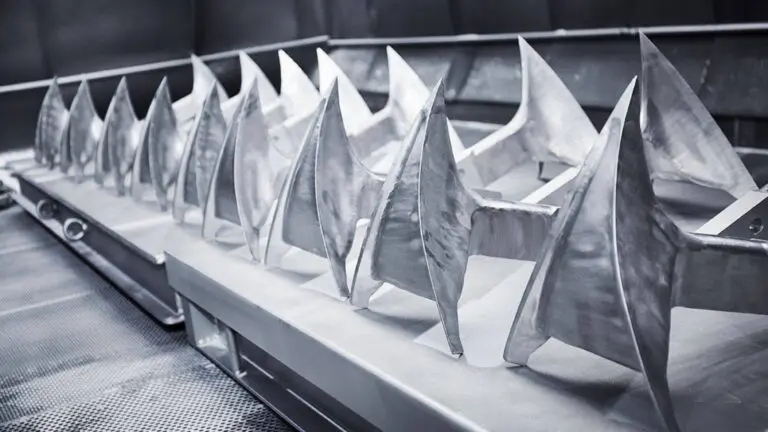
They operate based on the mechanically generated fluid bed that ensures a very good mixing performance and was introduced to industrial mixing technology by Lodige: The specially developed shovels rotate close to the wall inside a horizontal drum, creating the fluid bed. The process enables a high degree of homogeneity and constant reproducibility.
Treatment inside a Ploughshare mixer brings multiple advantages over other mixing methods: Intensive forced mixing combined with short process times ensures the highest mixing qualities and particularly efficient operation. Holding times, duration of treatment and other process variables can be modified depending on the characteristics being sought.
As a further advantage, the FKM enables precise temperature control of the raw materials by means of an insulated temperature control cover on the drum. The horizontal arrangement offers significantly more contact surface than a vertical system, ensuring fast and efficient heat transfer. The cover of the insulation to the outside made of welded stainless steel guarantees the machine design according to hygienic design.
In addition, the FKM allows liquid components to be added via mixer lances in the effective range of special choppers that rotate at up to 3,000 rpm and ensure ideal distribution of even higher-viscosity liquids in the mix. The sturdy design of the mixer ensures a long service life of 25 years or more, and minimizes maintenance.
Hygienic Design
Ploughshare mixers come in various sizes and are also available in an explosion-protected version for specific applications. The customer-specific design of the machines and machine lines is just as much a matter of course as strict adherence to all current GMP directives and FDA regulations, which also apply to the production of veterinary chewable tablets and other pharmaceuticals.
In close cooperation with the representatives of major manufacturers of pharmaceutical products, Lodige has realized far more than 1,000 systems according to requirements in the last few decades.
Automatic WIP systems for reliable and reproducible cleaning of the mixer are an essential element of hygienic design. The cleaning process itself comprises the residue-free removal of any remaining product and material build-up in the entire inside of the machine. For this purpose, the seals on the mixing unit and choppers are switched from their usual gas flush to a water flush to prevent ingress of cleaning water into the seals.
The horizontal mixer itself is cleaned successively from top to bottom. For this purpose, all inlets on top of the machine are equipped with cleaning nozzles, which are either fixed in place on the inside of the inlet or can be positioned on the inlet by means of a washing adapter. It is also possible to install automated retractable cleaning nozzles. Filters are generally completely moistened while installed and then removed for further cleaning (i.e., in a dishwasher or an ultrasonic bath).
The washing water used for cleaning the inlets is collected in the mixing drum and later used for cleaning the mixing vessel, which requires a filling level of 20 to 30 percent with cleaning fluid. Cleaning of the mixing drum itself is carried out by means of the mixing elements, which effectively ensure intensive and turbulent contact between the mixing drum and the cleaning liquid in forward and reverse operation.
If necessary, any product residue remaining in the mixer can be soaked during this process. Mixing systems with higher volumes use rotating targeted jet cleaners to clean the drum in order to maintain sustainable levels of water volume used per cleaning cycle. For this process, it is possible to use both fresh water and closed-loop circulation mode.
Automatic cleaning of the mixer discharge is a demanding task. The reason for this is the more complex geometry of the discharge door, drive shaft and sealing surfaces. A combination of static cleaning nozzles and a centrally located rotating spray ball, as well as opening and closing the door in interval mode have proven successful for intense cleaning of all surfaces. Any wastewater created by the cleaning process is discharged through a drainage cone installed at the mixer discharge.
Production of Veterinary Chewable Tablets From a Single Source
Lodige goes beyond supplying mixers. As a solution provider, we also implement entire machine lines. In the case of a production machine line for veterinary chewable tablets, a complete solution includes the complete dosing, temperature control, regulation and control technology for the raw materials according to CFR 21 part11, as well as the piping (also temperature controlled), the melting container, and the installations for weighing and adding the individual ingredients.
Our Lodige team accompanies the customer during the implementation of the entire machine line from planning to commissioning, including during the qualification process and subsequent documentation.
If you have questions about production of veterinary chewable tablets, we’re happy to answer them. Reach out to our team today.