Turnkey Manufacturing Solutions: Why One Machine Can’t Do It All
Key Takeaways
- Turnkey manufacturing solutions are projects designed, delivered and commissioned by a single vendor.
- For applications where a single equipment piece can’t achieve the project’s objectives, a turnkey system made up of separate, specialized equipment is the best solution.
- From a buyer’s perspective, turnkey projects are worth the investment in terms of reduced time, oversight burden and business risk.
“Turnkey” is an industrial engineering phrase that has as many definitions as it has applications. For our purposes here, a turnkey manufacturing system is one that is provided by a single supplier from design to commissioning.
To add another layer onto our definition, turnkey can also refer to a system that breaks apart distinct process unit operations from a single machine into multiple machines. In such a system, the integrator decides that separate equipment centers will be more effective than a single, multi-process machine – usually to boost performance and throughput.
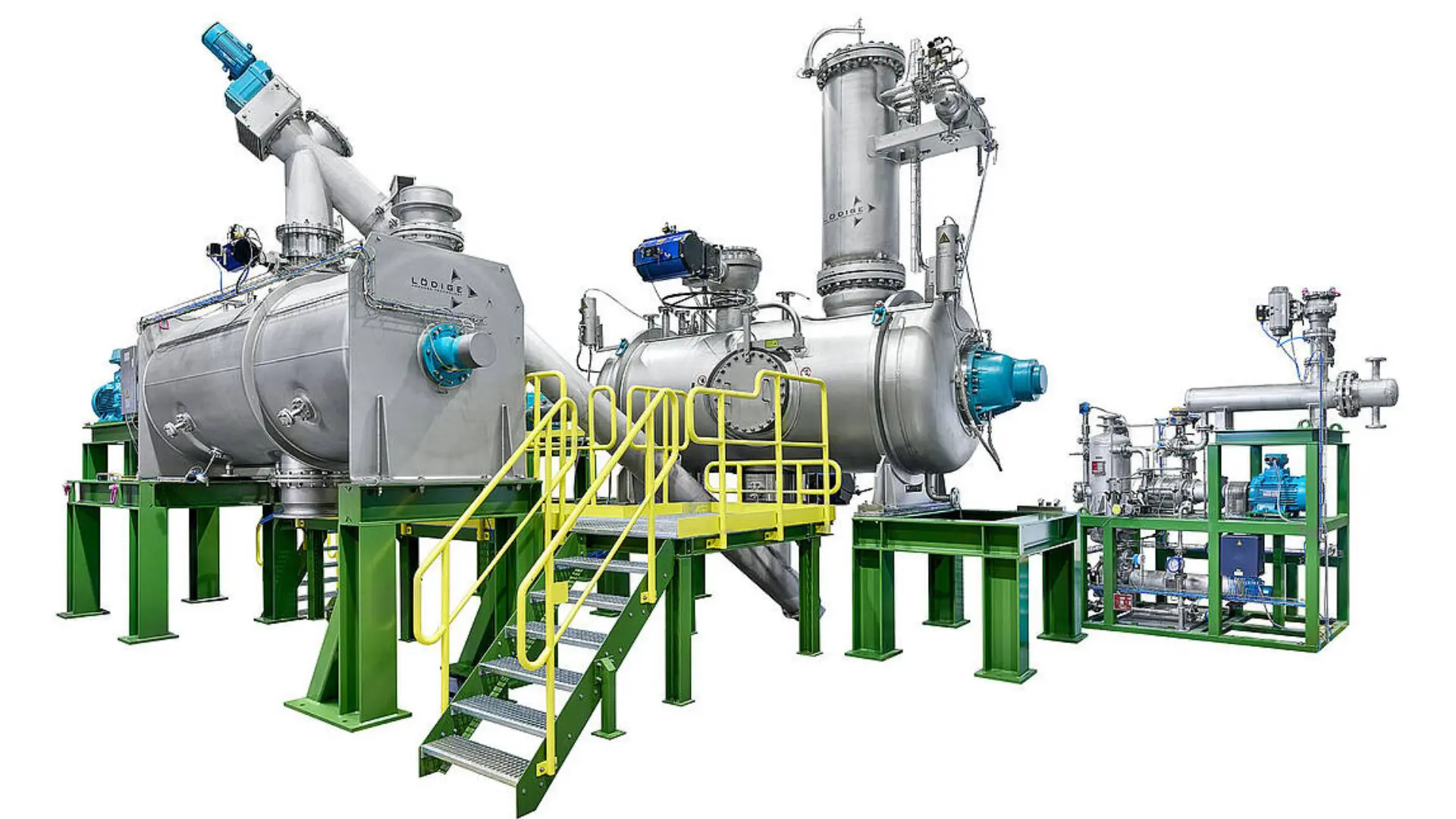
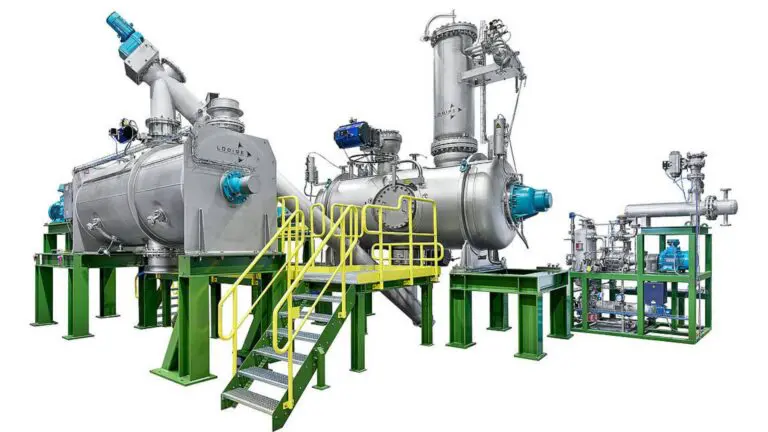
Lodige Turnkey Process System
In other words, where one multi-process machine can’t do it all, a turnkey manufacturing solution is the best way to go.
What Does a Turnkey Manufacturing System Look Like?
To give you an idea of what turnkey manufacturing solutions look like, let’s dig into this example system of machines used to make polymer additives:
- Raw material feeding: Bulk powders are discharged from super sack totes or bulk silos into the mixer below, including infeed screening and sifting to pull out oversized clumps and foreign objects.
- Dry mixing: Powders are combined in a horizontal mixer (like the Lodige Ploughshare Batch Mixer) to evenly distribute ingredients, break up agglomerates and achieve a uniform consistency ready for further processing.
- Wet granulation: The mixed powder base is then transferred to a granulator (like the Lodige Universal Mixer Granulator), where a binder is added to create larger granules that are better for dosing and dust mitigation than fine powders.
- Vacuum drying: After granulation, the granules are conveyed to a rotary vacuum dryer (like the Lodige Druvatherm Vacuum Shovel Dryer), where excess moisture is actively removed at low temperatures, protecting the integrity of sensitive ingredients.
- Final particulate sizing: In this final step, dried granules are run through a finishing sieve, which reclaims oversized particles for separate re-processing down to the required specifications.
In this example, the buyer contracted with a single-source vendor to deliver the complete process system as a turnkey package, starting with an empty production space and finishing with a commissioned system ready to start production.
The Engineering of Splitting Up Unit Operations
For applications where a turnkey system is preferred over a single multi-process machine, four engineering factors drive this decision:
- Per-step specifications, when some process steps require greatly different performance specifications than others
- Dissimilar hazard levels when process steps require varying levels of hazard mitigation
- Non-linear production when process steps must occur at different rates, time spans or in variable sequences
- Custom steps when individual production steps require highly customized operations or processing methods
In short, a turnkey manufacturing solution allows each process step to be optimized for its individual needs, achieving performance and quality levels that a single multi-process machine can’t hit.
Wondering if Turnkey Manufacturing Solutions Are Best for You?
From the buyer’s perspective, a turnkey manufacturing solution is a commercial procurement strategy that is often well worth the cost in terms of lower risk, higher confidence and saved time. Reach us here to talk about turnkey options for your projects.